
Women make up at least half of the world’s population. But how are they represented in the media? For centuries, public life has been dominated by men, which naturally carries over into media coverage. When we talk about women in the media, we mean both the role of women journalists—the specific challenges they face and the risks and dangers they are exposed to—and how women are portrayed by the media. How are issues such as violence against women, gender equality, and health or social matters important to women discussed?
We will discuss all this on 21 and 22 October in a series of events involving the Association of European Journalists – Bulgaria, under the umbrella of our discussion series Sofia Talks Media.
Please note: Separate registration is required for each event. Participation is free, but places are limited, so please carefully consider which events you can attend before registering.
We begin at 14:00 on 21 October (Wednesday) with the conference “How Do We Tell Stories of Violence?”, organised in Sofia by the WakeUp Foundation, with AEJ as a partner. You can find details about the event here.
We continue at 19:00 on the same day (21 October, Wednesday) with an evening discussion, “Women and New Digital Threats”, featuring French journalist and researcher Elodie Vialle, Romanian investigative reporter Luiza Popovici, and AEJ-Bulgaria chair Maria Cheresheva.
Event Highlights
Journalism has always been a profession involving risks. In the digital age, however, these risks take on new forms. Online harassment, doxing and the misuse of artificial intelligence can target journalists simply for doing their jobs, with consequences that extend far beyond the digital space. Women journalists are particularly vulnerable, and attacks often intensify around elections, including through coordinated disinformation campaigns aimed at undermining trust in the media and reporters.
These attacks affect us all. Internationally and across Europe, similar tactics of online harassment and intimidation are also used against researchers, scientists, environmental advocates and experts who contribute their knowledge and expertise to public debate. When those who inform us are attacked, discredited or forced to withdraw from public life, our own access to free and independent information is also at stake. You can find more about the event programme here.
When: 21 October 2026, 19:00–21:00
Location: Sofia (the venue will be shared with approved participants)
Working language: English
On 22 October, AEJ-Bulgaria is organising a one-day training session on investigating online violence and exploitation, as well as tools and methods for protection against online harassment. The event is exclusively for women journalists because of the gender-specific aspects of the problem. It is part of AEJ-Bulgaria’s initiative to support women in journalism and build a network of mutual support.
Training Highlights
With the help of leading professionals in the field—Czech investigative journalist Apolena Rychlikova and French digital safety expert Elodie Vialle—we will explore violence in all its dimensions: how we investigate it through journalism, how we write about and cover high-risk cases, how we protect ourselves from threats in the digital space, and what protection European regulations and digital policies offer. At the end of the day, media researcher Nikoleta Daskalova will summarise the cases shared by participants during the training and focus the discussion on the everyday risks faced by women journalists in Bulgaria. You can find more about the training programme here.
The workshop will take place on 22 October (Thursday), from 9:30 to 17:30 in Sofia. Participation is free, but places are limited. Please register using this form by 15 October, after which you will receive confirmation of your participation. Interpretation from English will be provided.
The training is funded by the European Union as part of the IMPACT project led by the European Federation of Journalists (EFJ). Views and opinions expressed are however those of the author(s) only and do not necessarily reflect those of the European Union or European Education and Culture Executive Agency (EACEA). Neither the European Union nor EACEA can be held responsible for them.
When: 22 October 2026, 9:30–17:30
Location: Sofia (the venue will be shared with approved participants)
Working language: English, with interpretation provided
The series of events is made possible with the support of the European Federation of Journalists (EFJ) and the Friedrich Naumann Foundation for Freedom, and in partnership with the WakeUp Foundation.
About the Speakers:
Apolena Rychlikova
Journalist, documentary filmmaker and editor-in-chief of Page Not Found, Czechia
 Apolena Rychlikova is an award-winning investigative journalist and documentary filmmaker, as well as co-founder and editor-in-chief of the independent Czech media outlet Page Not Found. Her work focuses on online exploitation, sexual violence, digital platforms, influencers, radicalisation, and the ways technology reshapes power and vulnerability. Her reporting has been published by or produced in collaboration with outlets such as The Guardian, European Correspondent, BIRN, OCCRP, CNN and Foreign Policy. She has also written and directed several documentary films, including Limits of Work and The Limits of Europe.
Elodie Vialle
 Elodie Vialle is a journalist, digital policy adviser and digital safety trainer. She has more than ten years of experience supporting journalists and newsrooms facing digital threats. She has held fellowships at Harvard University’s Berkman Klein Center and Institute for Rebooting Social Media, as well as a Knight-Wallace Fellowship at the University of Michigan. In 2025, Vialle authored the report Ending the Silence on Online Harassment of Journalists for the European Federation of Journalists (EFJ), which includes the first technology policy guide of its kind for European trade unions.
Nikoleta Daskalova
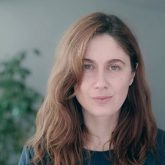 Media researcher, co-author of the study “Being a Journalist: The State of the Profession” (2017) and author of “Being a Woman Journalist: The Cost of the Profession” (2026).
Luiza Popovici
 Luiza Popovici is an investigative journalist who has worked at the Romanian media outlet PressOne for the past three years. She authored a widely discussed investigation exposing a prominent psychiatrist who frequently appeared on television and at high-level forums. Behind his media persona, he turned out to be a fraud who not only lacked a degree but also sexually harassed female patients. Luiza also covers pseudoscientific practices in psychology that mislead people with empty promises.
Maria Cheresheva
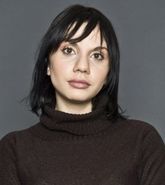 Maria Cheresheva has more than 15 years of experience as a journalist working for various Bulgarian and international media outlets. Her work has appeared in the Balkan Investigative Reporting Network (BIRN), ZDF, ARTE, Deutsche Welle, Le Monde, OCCRP, BBC, Der Spiegel and others. For more than a decade, her investigative journalism has centred on human rights issues, with a focus on migration and the arms trade from the Balkans. She has worked as a radio host and is currently involved in various documentary and podcast projects, while also teaching journalistic writing at the American University in Blagoevgrad. She has received various Bulgarian and international awards for her work, including the Bulgarian Helsinki Committee’s “Journalist of the Year” award in 2023. Maria is the chair and one of the founders of the Association of European Journalists – Bulgaria (AEJ).